Vertigo is a condition characterized by a perceived sense of movement—either of one’s body, such as swaying or rotation, or of the surrounding environment, or both.
It is more common than many realize, affecting up to 40% of the population at some point in their lifetime.
The symptoms of vertigo can be highly disabling, often restricting daily activities and significantly increasing the risk of falls among elderly patients.
In fact, up to 80% of individuals with moderate or severe dizziness or vertigo report interruptions in their normal routines, including the need for medical consultation or taking sick leave from work.
While vertigo is treatable, many current therapies primarily offer symptomatic relief rather than addressing the underlying cause.
This makes it essential for patients to seek medical advice to understand treatment goals, including the optimal dose and duration required for maximum benefit.
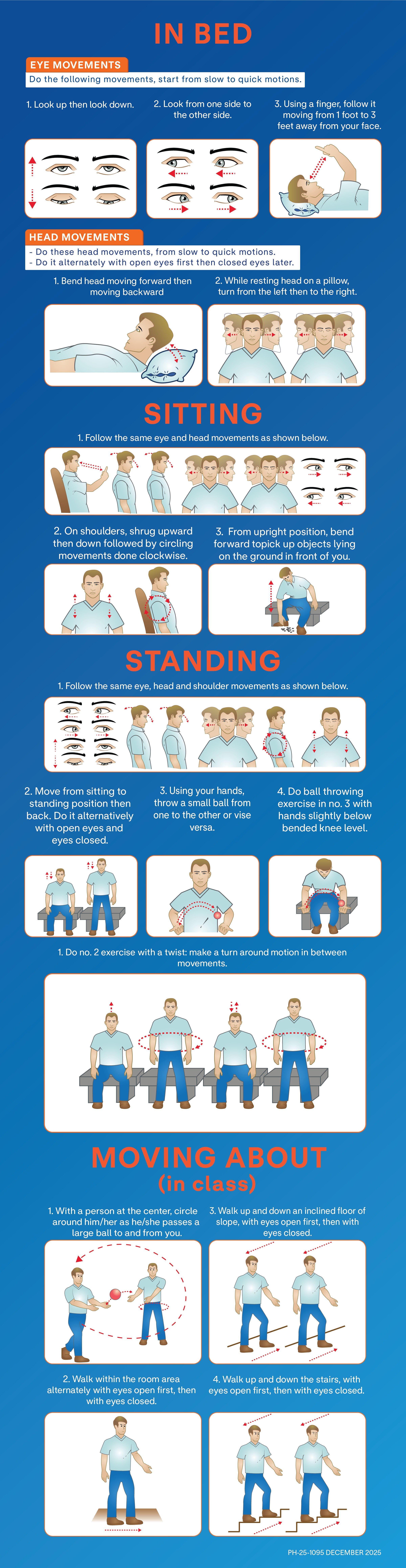
In addition to medical treatment, certain exercises and lifestyle tips can help alleviate symptoms and improve quality of life.
If you experience persistent dizziness or vertigo, consult a healthcare professional promptly to ensure proper diagnosis and management.
Below are exercises that will help you cope with vertigo. Please take note that individual patients should be accompanied by a friend or a relative who is also learning the exercises and that this information is intended for your general knowledge only and is not a substitute for professional medical care. This chart should be used only under the supervision and direction of your physician. Please consult your physician with any questions or concerns you may have about your condition.